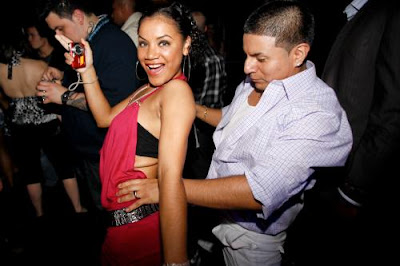
Sabor is very proud to support Salida Productions on a Circus Party this 3rd of May, from 7.30 pm till 2am, at the Old Vic Tunnels, in Waterloo, Leake Street Entrance, London SE1 8SW Circus Party is an exciting fundraising event that will include DJ’s, Colombian food made by Sabor and drinks with special guest artists Circolombia’s Urban and Friends. All funds raised will go towards 'Macbeth', a Circo Para Todos project for Autumn 2012 .
Salida Productions will be collaborating with Circolombia (www.circolombia.com) in Cali, Colombia on a brand new version of Macbeth this Autumn 2012.
We would like to share this article about Latin music in the Uk, written by Amaranta Wright from Candela Live, a London base Latin music and culture promoters.
Notwithstanding the cheesy album covers, Candela explores the rich and idiocyncratic story of Latin Music in London to celebrate LaLinea's 10th anniversary festival this year.
It was 1981. I mostly remember the legs of dark, glossy-haired, poncho-wearing folk, as I squeezed through them to get to the front. There, I had full view of Gilberto Gil as he sung his acoustic version of Bob Marley’s No Woman No Cry. Perhaps it was the playful, sweet percussive serenity of his music, its simplicity and richness, or the sheer emotion it generated in the room. Whatever it was, it blew this nine-year-old away and I still thank the flaky babysitter, who ever she was, who failed to turn up that night, forcing my parents to sneak me into the Hammersmith Palais on a cold winter’s night. It was my first ever concert and it cemented my love for Latin Music forever.
Many would be surprised to know how long Latin Music has entranced audiences in the UK. Back in the 1940s Cuban bandleader Don Marino Barreto made his name playing to pilots on the Salisbury Plain during the Battle of Britain. After the war, Barreto passed his band over to Edmundo Ros who became the most successful musician in Britain, across the board.
The 1940s and 1950s and the Curious Case of a One Man Latin Allure
Arriving from Caracas, Venezuela, Ros became a sensation after Parlophone released Los Hijos de Buda in 1941. He went on to have several hits, including Rhythms of the South and Arriba and his albums sold briskly. His biggest hit, The Wedding Samba, even crossed over to the U.S. Top Five, selling three million copies in the process.
The charismatic Latino attracted the cream of London society to his appearances at the lavish Coconut Grove on Regent Street. The national headlines he made, when a defendant in a high-profile divorce case implicated him as a catalyst for his marriage's demise, only made him more popular. He even taught then-Princess Elizabeth and her sister Princess Margaret to dance.
He owned three nightclubs in the West End, including the Coconut Grove site which he bought and renamed Edmundo Ros' Dinner and Supper Club, and was a DJ on Radio 2. His radio programmes became the ‘housewives choice’, as he tailored his Latin big band sound to the English ear by emphasising melody over rhythm. The cool society scene created by Barreto and Ros, opened the door for other Afro-Caribbean immigrant artists such as Rita Cann, the distinguished pianist who formed her own Latin Band in the 1940s. Ros was awarded the Order of the British Empire in the 2000 New Year's Honours List.
Playing to the stereotype of Latin cheese: the popular Edmundo Ros
The 1970s and 1980s and the Music of Latin Solidarity
During the 1960s, the popularity of Latin Music gave way to Beatlemania and the ascent of English pop. In the early 1970s, however, it came back in a different form, when political refugees started to flood in from the wave of dictatorships sweeping through Latin America, starting with the coup that overthrew socialist President Allende in Chile in 1973 to the US interventions in Central America of the 1980s. With the political migrants, many of whom were creative types and musicians, you had a developing interest in the Nueva Trova and Canción de Protesta (protest music) of the likes of Argentina’s Mercedes Sosa, and Cuba’s Silvio Rodriguez. The exiled years of Brazilian legends Gilberto Gil and Caetano Veloso in West London added much allure to this cool London sub-culture.
In these de-politicized times, it is difficult to imagine political Latin music having widespread appeal, yet Andy Wood, La Linea promoter who started his career putting on concerts for the Nicaragua Solidarity Campaign describes a buzzing scene that tapped into the broader politically activity in Britain at the time. “The Nicaragua Campaign had thirty full time staff and brought loads of artists. We had support from the Greater London Council (run by ‘Red Ken’ Livingstone) who helped bring the likes of Rubén Blades, Inti-illimani and Silvio Rodriguez. This was before the dance class boom. People enjoyed dancing to live salsa, without worrying whether they were dancing on the one or the two.”
The Impact of Latino Immigrant Culture
Accompanying the influx of political refugees was an even bigger wave of economic migrants in the late 1970s, mostly from Colombia, fleeing both the political and economic terrors of a 40-year long civil war. A second Colombian wave came with the further economic slump caused by the busting of the drug cartels in the late 1980s. Today, Britain has the world’s third largest Colombian Diaspora, after the US and Spain.
Out of the spotlight, the Colombian community, known to be great salsa lovers, built their own thriving music scene in London. The Guardian writer Richard Williams remembers the Monday night in 1975 when a grungy punk-rocker pub, acted as stage for the first salsa band to across the Atlantic. A 29-year-old Héctor Lavoe, already a legend in the US and South America, played to a scrawny London pub crowd and, according to Williams “for a couple of hours made its seem like the only place to be.”
In the years to come, the sheer numbers of Latinos in London and their musical nostalgia ensured an audience for some of the salsa greats who came to play in London year after year through the 1980s– Colombia’s Grupo Niche, Gilberto Santa Rosa and El Gran Combo de Puerto Rico, Willie Colón and Venezuela’s legendary Oscar de Leon. to name a few.
The Colombians in London certainly played a big part in kicking off the Salsa club phenomenon. For, as well filling their own clubs, their party spirit spilled over into the mainstream Latin themed bars that were springing up all over London offering salsa classes. Paul Young, who jumped on the trend by congregating thousands of salsa fans in weekend Congresses says, “a lot of those people were introduced to Latin music and artists such as Tito Puente, purely through the dance.”
The allure of Latin rhythms allowed many British musicians such as pianist Alex Wilson and Robin Jones of Salsa King or DJs Snowboy and Gilles Peterson, to make a living off their passion for Latin music. But the influence hasn’t all been one way. You can hear the appreciation of English pop in the much of the music of Gilberto Gil and Caetano Veloso, from London, London Veloso’s melodic tribute to the city to Gil’s stunning Brazilianisation of The Beatles’ Hello, Goodbye. Other migrating Latinos have infiltrated the English music establishment behind the scenes: Percussionist Roberto Pla, who started out with Boney M.,Venezuelan-Argentine Stereophonics drummer Javier Weyler or Roxy Music’s Phil Manzanera from Colombia. As solo artists all have fused Latin rhythms with British pop and electronic styles.
The 'Latin Boom' of the 1990s
The years of Canción de Protesta and the Latino immigrant culture bubbling under London’s surface, coincided with the advent of World Music which was being promoted by mainstream music magazines such as NME. The influential music weekly displayed artists such as Bhundu Boys and Kid Creole and the Coconuts on the cover for the first time in Britain.
With his stream of chart successes in the UK such as Annie, I'm Not Your Daddy, Kid Creole in particular became hugely influential in providing the Anglo audience with the bridge into Latin Music, says Andy Wood, “Kid Creole invented World Music before anyone had a name for it. By synthesizing Latin and Caribbean music for a wider audience, I would say he did what Edmundo Ros did, but for a different generation.”
This opening of the doors, together with the revival of traditional Cuban music, according to Wood, prepared the ground for the success of Buena Vista Social Club in the nineties. “The popularity of the Buena Vista artists was not the product of some big marketing master plan, as some people think,” says Nick Gold, executive producer of the Buena Vista series, “but the live performances, great reviews and word of mouth of an already receptive audience. The Wim Wenders film then made it into an international phenomenon.”
Then, of course, came the invasion of the commercial superstars via the US - Gloria Estevan, Ricky Martin, and Shakira - who provided the Saturday night anthems of London’s now prolific Latin-flavoured venues such as Bar Salsa and Havana and added to what the Evening Standard described as “The Latin Boom.”
This English and London Latino appreciation for a common sound culminated in the Latin mega-festivals that began with Salsa 2000 in Battersea Park, which had Celia Cruz, Oscar de Leon, Ruben Blades and Alberto ‘El Canario’ sharing the stage. This was followed by the launch of La Linea, which celebrates its 10th anniversary this year and Clapham Common’s Latin Splash, which drew 9,000 people in 2005.
The Future of Latin Music in London
The new generation: club culture taking Latin Music forward in the UK
The impact of the estimated 700,000 strong Latin American community (mostly in London) can been and in the many established yearly music festivals - Carnaval del Pueblo, Colombianamente and Colombiage - that are now part of London life.
The Latin music of choice has changed, however. “We always used to open La Linea with a salsa band,” says Wood. “But La Linea is about New Latin Music and sadly there is not a lot new happening in Salsa.”
The great bands such as Cuba’s Los Van Van that are able to reinvent themselves through the generations will always fill venues, but there is more interest now in fusion groups such as the Cuban Hip hop-timba project Orishas, or the electronic tango outfits Bajo Fondo and Gotan Project.
The new, however, still sits comfortablu side by side with the appreciation for traditional orchestras. Andy Wood remembers the double-Cuban bill he put on with Orishas and the legendary Orchestra Aragaon, which was like a passing of the baton.” When Orishas went on first, Orchestra Aragon band leader Rafael was looking distinctly nervous when he looked out to see all the girls who were throwing themselves at Orishas and said this doesn’t look like our audience. But in fact when they went on the same girls were dancing just the same in the second half, only they weren’t passing them their numbers.”
Meanwhile, a new Latin movement that London can call its very own is being created by the first generation of Latino-Brits, now coming of age and making their mark on London, mostly noticeably on the Club scene. Their music of choice is Urban Latin with its creative fusions of Afro-Latin genres Bachata, Bomba, Plena with Salsa, Hip–hop and House. The big names Tego Calderón, Calle 13, and Pitbull have already played in London to audiences that are the most eclectic yet. At La Bomba, London’s biggest Latin Urban party Jamaican, Asian, Arab as well as white and Latino Londoners. “Whereas the salsa scene began to alienate people with its obsessive focus on dance technique,” says La Bomba promoter DJ Joe Luis. ”This scene brings it back to the music and culture of the Spanish Caribbean. Its recreating that inclusive atmosphere and making it even more part of the ever broadening spectrum of British music culture.”
Sabor is proud to be collaborating with Vinopolis in the celebration of 200 years of Colombian Independence this year. For this event we have created a new range of cocktails using Colombian fruits, which will be served at a special event at Vinopolis on the evening of 20th July.
As we are music lovers we are delighted to see the mighty Afro-Colombian group Choc Quib Town make a rare UK appearance. They have won critical acclaim for their enticing fusion of hip-hop, dub, electronica and rhythms from Colombia's Pacific coast, and they will be appearing at the Jazz Café on Monday 24th of May - we have tickets for sale at Sabor.
Their innovative sond fuses funk, North American hip-hop, jamaican ragga, and elements of electronic music in order to produce elaborate beats. They also incorporate traditional rhythms from Colombia's Pacific coast such as bunde, currulao, bambazu, and aguabajo as well as other Latin American and caribbean rhythms such as salsa songo and guajira. Choc Quib Town shows that there's much more to discover about is more to discover about Colombian Music. They also have a new album out called Oro, which led to them being nominated for best new artist at the Latin Grammy's last year. Billboard.com said that "what makes "Oro" (which contains music from the band's first two Colombian releases) so interesting is that every track finds a new way to interpret the traditional sounds of the country's Pacific coast". It was also very enthusiastically reviewed (four stars!) by the Daily Telegraph last week - they described it as "a sound that feels at once timeless and euphorically current".
On Thursday 18th March the superb Colombian joropo band Cimarrón are coming to the Union Chapel in Islington. Performers like this bring back memories for me of my upbringing in Colombia, and in particular the diversity of musical and other cultural experiences which we were able to enjoy. I'm delighted to see troupes like Cimarrón coming to the UK and bringing with them their roots and their culture to share with us. Details of the concert may be found here - we are selling tickets in the restaurant.
In my early teens i became a member of a youth group in my home town Quinchia, in the department of Risaralda in the coffee region of Colombia, this group was set up by university students from our town, that having moved to Pereira, our departmental capital to continue the university studies, realised how little was on offer in our town for young people. The Corporacion Quinchia Nueva was set up, first as an study group, and it developed into a cultural organisation, in the absence of an official cultural organisation in the town. It consisted of various groups, such as sports teams, theatre, band and a dance troupe that was the most successful of the lot. By winning departmental folk dance championships and touring all around the country, this troupe developed to the point that it became the Ballet Michua, the official ballet company of the department of Risaralda. Folk dance had offered me a fantastic outlet in my youth, by learning about the different cultural regions of the country, and offering the opportunity of travel and broadening my horizon. Like the CQN there are many cultural organisations in Colombia, teaching young people about their roots, their communities and most importantly being an active part of the community.
Cimarrón is a seven-piece with spectacular, super-tight performances of joropo music and dance. Hailing from the vast Orinoco plains which stretch from Colombia into Venezuela, joropo is a fast traditional rhythm played on harp, bandola and cuatro accompanied by bass, cajon and maracas. Cimarrón fire up flawless virtuosity with a heart-stopping sense of drama.
Led by harpist Carlos Rojas and based in Colombia, Cimarrón have been experimenting with the music of their homeland for the past two decades, on the search for new musical horizons whilst staying true to their roots.
The mestizo people who inhabit the llanos [plains] on the great Orinoco river are descendants of Spanish settlers, African slaves and Indigenous Indians. This is cattle rearing country where life revolves around country ranches. Music accompanies the daily working tasks such as milking and cattle drives. The word Cimarrón, meaning wild bull, is a symbol of liberty in Los Llanos.
Many of us at Sabor were sorry to hear, earlier this week, that Mercedes Sosa, the Argentine folk singer who became a powerful voice of resistance to authoritarian Latin American regimes, died on 4th October in Buenos Aires. A leading light of the "nueva canción" (new song) movement that pushed for social justice in the 1960s and '70s, Sosa was 74.
I grew up listening to her music, as students we always played our favorite songs. She possessed a deep, alto voice and a strong sense of conviction, and had a warm, engaging personality. These qualities helped to make her one of the few Latin American musicians who could, over five decades, command a wide international audience. Described as "the voice of Latin America", she was revered as a commentator on the political and social turmoil that afflicted the region.
Driven into exile in Europe in 1979, Sosa returned to Argentina in 1982 and enjoyed a career renaissance and enormous popularity that endured throughout her life. "La Negra," as she was known, always sang in Spanish. "Her undisputed talent, her honesty and her profound convictions leave a great legacy to future generations," her family said in a statement.
If you're not familiar with Mercedes' work already, do take a look at this video on youtube, an excellent performance of one of her most moving songs.
Thanks to life (Gracias a la Vida) by Violeta Parra (translated by Ron Adams, 10/07/09)
Thanks to life, which has given me so much. It gave me two bright eyes that, when I open them, Can perfectly distinguish black from white And in the distant sky with her starry backdrop, And from within the multitudes, find the one I love.
Thanks to life, which has given me so much. It gave me hearing that in all its wide ranging Records night and day, the rattle of chains and canary songs, Tyrant shouts, the roar of war, slander, misfortune’s storms, And the tender, loving song.
Thanks to life, which has given me so much. It gave me meaning and learning. From them come the words I’m thinking and now confess: "Mother," "Friend," "Brother"; and the light shining On the road of the soul where love travels.
Thanks to life, which has given me so much. It gave me the strength in my tired feet. With them I have crossed cities and seas Valleys and deserts, mountains and plains To your house, down your street to your heart.
Thanks to life, which has given me so much. It gave me the passion that shakes my soul When I see the fruits of real human understanding, When I see far beyond the bad to the good, When I look deep into your clear eyes.
Thanks to life, which has given me so much. It gave me so much laughter and so many tears. With them I rescue happiness from the crush of pain— The two materials that form my song, And your song, that is my song too, And everyone’s song, that is my special song. Here’s to the life, which has given me so much.
Our owner/manager and many of the staff and customers of Sabor are long-term fans of Totó La Momposina, and are thrilled that she's coming to London to perform at Cargo in Shoreditch on Wednesday 16th September. Totó La Momposina is a Colombian Singer who has dedicated herself to preserving the music of the Caribbean coast of Colombian, which is a heavily rhythmic hybrid of Spanish, native South American, and Afro-Cuban influences. As such it mirrors what happened during the Spanish colonization of the Americas. Many rhythms were born from this fusion, of which gaita, cumbia, porro, chalupa and mapale are perhaps the most representative. Totó herself is often referred to as 'The Queen of Cumbia'. She mastered the different styles and rhythmic variations of the Colombian Caribbean so well that she was invited to perform at the 1982 Nobel Prize ceremony for eminent novelist Gabriel Garcia Marquez - another native of the region. La Momposina was born in the village of Talaigua, on the island of Mompos, located in the Magdalena River near Colombia's northern (Caribbean) coast. Not only was her family musical (her parents were fourth-generation musicians, her father a drummer, her mother a singer and dancer), but her village was blessed with the presence of Ramona Ruiz, a skilled, veteran cantadora (female peasant singer) who helped train La Momposina in her teenage years. La Momposina traveled up and down the Colombian coast, learning as much music and dance as she could -- from village celebrations to the common, everyday songs sung as accompaniment to daily labor. During this extended research period, La Momposina was honing her vocal and performance skills as well, discovering a rich power in her voice that soon made her extremely popular locally. In 1968 sbe formed her own band, continuing to perform at smaller local functions but now also expanding her horizons in hopes of building a professional career. Word of her vocal prowess spread quickly, and by the '70s, she had begun making international appearances, touring Europe and most of the Western Hemisphere. In 1982, after performing at the Nobel Prize ceremony for Garcia Marquez, she left to spend four years in Paris studying the history of dance at the Sorbonne. During this time, La Momposina recorded her first album, 1985's Totó La Momposina Y Sus Tambores. She returned to Colombia in 1987, reconnecting with her roots by touring in the more immediate region, and also traveled to Cuba for further musical study. In 1991, La Momposina was invited to join Peter Gabriel's WOMAD concert festival; she toured the world once again, and subsequently recorded a second album for Gabriel's Real World label. La Candela Viva was released in 1993 to much acclaim, and helped put La Momposina in great demand at music festivals around the world. The follow-up album, Carmelina, appeared in Europe in 1996. She continued to perform across the globe, now incorporating her grandchildren, as well as her children, into her large performing troupe and elaborate stage show. Her fourth album, Pacanto, was released in 2000.Her latest U.S. release, Carmelina, originally released in Europe in 1996, is a showcase of how tradition can stay vitally alive. "The traditional music I sing is what's been in my own family for generations and generations," she explained. "These days a lot of people have forgotten about traditional music, especially in Colombia. They want what's now. But you have to remember the past."
Our friends at London Salsa Scene tell us that one of our favourite musicians Alex Wilson has more shows coming up at Ronnie Scotts - here's what they have to say: "Somewhere between London and Havana, volcanic activity has triggered the emergence of a new tropical island – Salsa Con Soul. Catch the eruption as Alex Wilson (right) and his 12 piece Salsa Con Soul Orchestra let rip with their latest high energy fusion at three concerts at the legendary Ronnie Scotts in London's Soho, Thursday 3rd - Friday 4th September. Salsa Con Soul is the latest destination on Alex Wilson's circumnavigation of world rhythms and beats. The UK's top Latin/jazz piano man/band leader and featured instrumentalists will deliver driving salsa dura, laced with deeply felt soul and gospel vocals, drenched in Latin flavas, beats and rhythms at three concerts (early and late concerts Friday 4th September - book the late one if you want to stay on). This is an opportunity to hear some of the most authentic and tastiest salsa grooves you’ll hear anywhere in the world played live by the UK's No1 salsa crew and some of the finest salsa musicians around. Alex Wilson will play tracks from his 6th and latest album Salsa Con Soul (2008), his first totally dedicated to a genre he has made his own, salsa with soul, cranked up with bone aching gospel vocals. Expect to hear too some of Wilson's best known tunes - “Ain’t Nobody” & “Show Me” from his 5th album Inglaterra and “R&B Latino” from the eponymous album, with vocals from Aquilla Fearon, Niaomi Phillips & Elpidio Caicedo. Wilson’s 5th album Inglaterra was his first to feature the fire water of Salsa Dura neat, with tracks like Show Me and Ain’t Nobody appearing on 10 compilation albums and burning up dance floors in salsa clubs across the UK. This was another ground-breaking album, featuring the first ever Brit-Reggaeton-Salsa track and the first fusion of Cuban rhythms with Bhangra beats. Wilson's 3rd album - R&B Latino - created a cocktail of Cuban rhythms and R&B to blow away the cobwebs on the dance floor. With Salsa Con Soul, Alex Wilson has continued his relentless assault, only this time the burning yin fires of soul and gospel infuse the muscular, urgent yang drive of Cuban timba and hard salsa, creating a sensual, romantic vibe made for Ronnie's crepuscular hallows." TO BOOK TICKETS & FOR MORE INFORMATION: Ronnie Scott’s: 020 7439 0747 or visit: http://www.ronniescotts.co.uk/ and http://www.alexwilson.net/ and www.ronniescotts.co.uk/performances/detail/592/alex-wilson-salsa-orchestra/ Salsa Con Soul Orchestra line-up: Alex Wilson - Keyboards - (Courtney Pine, Jazz Jamaica); Aquilla Fearon - Vocals; Naomi Phillips - Vocals; Elpidio Caicedo - Vocals; Steve Dawson - Trumpet; Annette Brown - Trumpet; Trevor Mires - Trombone; Alistair White - Trombone; Javier Fioramonti - Bass; Emeris Solis - Congas; Dave Pattman - Timbales; Will Fry - Bongos